
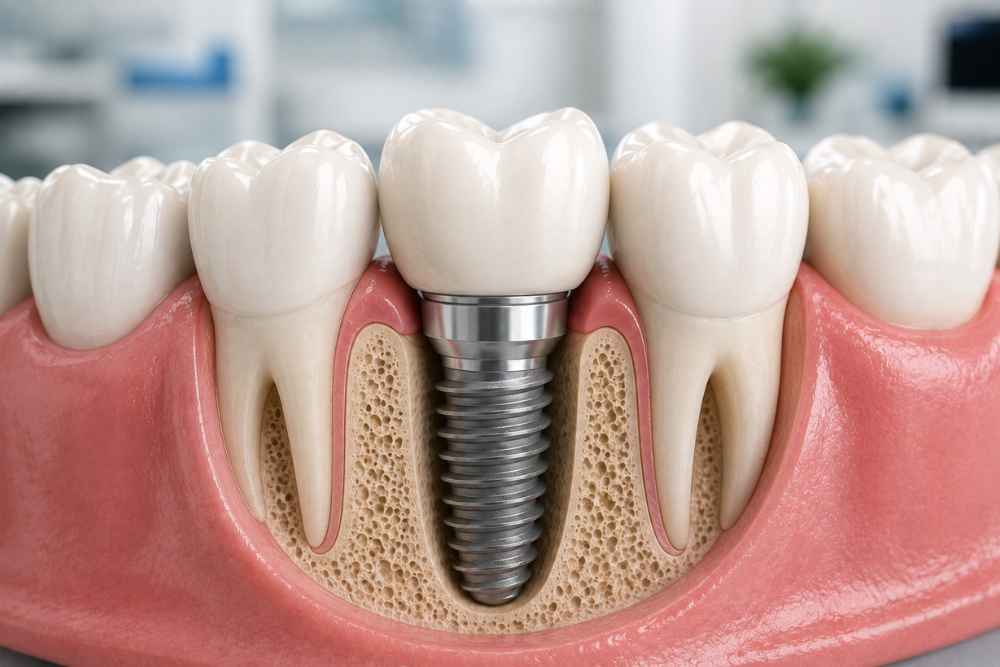
Getting a dental implant placed is just the beginning of a longer treatment journey, and the follow-up visits that come afterward play a significant role in how smoothly that journey unfolds. These appointments give your dental team a chance to monitor healing, assess the implant site, and check the surrounding gums and tissues. They also help your dentist determine whether the implant is healing as expected before moving forward with the next stage of treatment.
The timing and number of follow-up appointments can vary depending on the type of implant procedure, your individual healing process, and whether additional treatments were performed. An early appointment may focus on checking the surgical area and removing sutures if needed, while later visits may involve assessing the implant and planning for the final crown, bridge, or denture.
This guide walks through when dental implant follow-up appointments typically happen, what each visit may involve, and what you can expect during the healing period. It also explains the warning signs that suggest you should contact your dental team sooner rather than waiting for your next scheduled appointment.
At a Glance
- Follow-up visits typically happen at set intervals: an early check at 1–2 weeks, a soft tissue review at 4–6 weeks, an osseointegration check at 2–4 months, and a readiness assessment at 3–6 months.
- Factors like implant type, overall health, smoking, and implant location can all affect how your personal follow-up schedule is structured.
- Dentists confirm implant readiness through clinical assessment and imaging, not by calendar date alone.
- Patients are generally encouraged to contact their dental team between visits if something feels off, rather than waiting for the next appointment.
- Most fluctuations during healing are normal, but worsening symptoms or sudden fever, bleeding, or swelling warrant an earlier check-in..
Why Follow-Up Visits Matter After Implant Surgery
Dental implants rely on a biological healing process called osseointegration, where the implant gradually fuses with the surrounding jawbone. This process unfolds over weeks and months, and it isn’t something that can be fully assessed through self-observation alone. Follow-up visits allow your dentist to check the surgical site, evaluate healing progress, and assess whether any complications or concerns require further attention.
Because healing can vary from person to person, follow-up schedules are generally tailored to the individual rather than following one fixed timeline for every patient. That said, there are general patterns that many dental implants in Lower Hutt may use similar follow-up intervals as a general starting point for monitoring recovery.
A General Timeline of Follow-Up Visits
While your dentist’s specific recommendations should always take priority, here’s a commonly referenced general framework for what follow-up care after implant surgery can look like:
1–2 Weeks After Surgery: Initial Healing Check
This early visit is typically focused on checking the surgical site for signs of proper healing, addressing any swelling or discomfort, and in some cases, removing sutures if they weren’t self-dissolving. It’s also an opportunity to ask questions about your recovery so far.
4–6 Weeks After Surgery: Soft Tissue Healing Review
By this stage, the gum tissue around the implant has usually settled significantly. This visit often involves a visual and sometimes radiographic check to confirm that healing is progressing without signs of infection or other concerns.
2–4 Months After Surgery: Osseointegration Progress Check
Depending on the location of the implant and individual healing factors, this stage may involve imaging or stability testing to assess how well the implant has integrated with the jawbone. For lower jaw implants, this checkpoint sometimes falls earlier in the range; for upper jaw implants, it may fall later.
3–6 Months After Surgery: Readiness for Final Restoration
Once osseointegration has progressed sufficiently, your dentist will typically evaluate whether the implant is ready for the abutment and final crown, bridge, or denture. This isn’t based on a fixed calendar date but on clinical assessment of the implant’s stability.
Ongoing Follow-Up After Restoration
Even after the final restoration is placed, regular dental checkups remain important for monitoring the implant’s long-term function, much like natural teeth.
These timeframes are general reference points rather than a fixed schedule, since factors like bone density, overall health, and the specific implant system used can all influence how your individual follow-up plan is structured.
Factors That May Affect Your Personal Follow-Up Schedule
Type of Implant Procedure
Some patients have implants placed as a single procedure, while others require staged approaches involving bone grafting or sinus lifts beforehand. These more involved cases often come with additional follow-up visits built into the plan.
Overall Health and Healing Capacity
Conditions such as diabetes or osteoporosis, along with certain medications, can influence healing time and may lead your dentist to schedule more frequent check-ins during recovery.
Smoking or Tobacco Use
Because tobacco use has been associated with slower healing and a higher likelihood of complications, patients who smoke may be advised to attend follow-up visits more closely spaced together.
Location of the Implant
The location of the implant can influence the healing period and may be considered when planning follow-up appointments, which can influence how follow-up visits are spaced during the osseointegration period.
If you’re unsure about your specific follow-up schedule or have questions between visits, reaching out to a dentist in Lower Hutt can help clarify what to expect at each stage and whether any symptoms you’re experiencing warrant an earlier check-in. At Wainui Dental, follow-up scheduling is generally discussed with patients as part of their overall treatment plan, so expectations are set from the outset rather than left uncertain.
The Role of Patient Communication Between Visits
Follow-up appointments are scheduled at set intervals, but healing doesn’t necessarily wait politely for the next visit on the calendar. This is why many dental practices encourage patients to reach out between appointments if something feels off, rather than treating scheduled visits as the only opportunity to raise concerns.
Being proactive about communication can also help your dental team build a more complete picture of your recovery. Details that might seem minor, such as when swelling started to improve, or whether discomfort is localised to one area versus more general, can be useful context during your next visit, even if they didn’t seem urgent enough to warrant an earlier call.
Some practices also provide written aftercare instructions or a summary of what to expect at each stage, which can serve as a helpful reference point between visits. If you weren’t given this kind of resource, or if you’ve misplaced it, it’s reasonable to ask your dental team for a refresher rather than relying on memory alone.
Understanding the Difference Between Routine Healing and a Setback
Not every unexpected symptom during recovery indicates a serious problem, and distinguishing between normal healing variation and a genuine setback can be difficult without professional input. Mild fluctuations in swelling, occasional minor discomfort, or gradual changes in sensation are often part of a typical healing process. This is particularly relevant after dental implant treatment, where the gums and surrounding tissues need time to recover following the procedure.
What generally distinguishes a concern worth flagging is a pattern of worsening rather than gradual improvement, or the sudden onset of symptoms like fever, significant bleeding, increasing swelling, or persistent severe discomfort.
Rather than trying to self-diagnose whether something is within the range of normal, reaching out to your dental provider with a clear description of what you’re experiencing allows them to assess the situation based on your specific case and treatment history. They can determine whether your symptoms are consistent with the expected recovery process or whether an examination is appropriate. Following the aftercare instructions provided by your dental team and attending scheduled follow-up appointments can also help keep your recovery on track.
Frequently Asked Questions
How many follow-up visits are typically needed after implant surgery?
This varies by case, but many patients attend several follow-up visits over the course of a few months, from initial healing checks through to final restoration and beyond. Your dentist can give you a more specific plan based on your situation.
What happens if I miss a scheduled follow-up appointment?
It’s best to reschedule as soon as possible, since these visits are how your dental team monitors healing progress. Missing checkpoints doesn’t necessarily cause problems, but it does reduce opportunities to catch potential issues early.
Can follow-up visits be done virtually?
Some practices may offer a phone or video check-in for minor concerns, but in-person visits are generally necessary for physical examination and imaging, particularly during key healing milestones.
Is it normal to still have questions between scheduled visits?
Yes, and most dental practices welcome patients reaching out with questions or concerns rather than waiting until the next appointment, especially if new symptoms develop.
Conclusion
Follow-up care after dental implant surgery isn’t just a formality, it’s an important part of how healing is monitored and how potential issues are caught early. While general timelines exist for when these visits typically happen, your dentist’s specific recommendations, based on your healing progress and individual health factors, should always take priority.
Wainui Dental can walk you through a follow-up plan tailored to your treatment and healing progress from surgery through to your final restoration.
Sources:
- National Library of Medicine. (2023). Optimizing osseointegration in dental implantology: a cross-disciplinary review of current and emerging strategies. Available at: https://pmc.ncbi.nlm.nih.gov/articles/PMC10685082/
- Healthdirect Australia. (n.d.). Dental implant. Available at: https://www.healthdirect.gov.au/dental-implant
- National Library of Medicine (PMC). (2019). Factors affecting the survival rate of dental implants: A retrospective study. Available at: https://pmc.ncbi.nlm.nih.gov/articles/PMC6580877/
- National Library of Medicine (PMC). (2021). Effect of smoking on osseointegration and implant survival: a systematic review. Available at: https://pmc.ncbi.nlm.nih.gov/articles/PMC8004815/

Wainui Dental Clinic has been caring for smiles across the Lower Hutt community with a commitment to quality and personalised treatment. From general dentistry to oral surgery, our dentist in Lower Hutt team uses modern technology to deliver comfortable, patient-centred care. We are passionate about ongoing professional development to ensure every patient receives the best dental experience possible.