
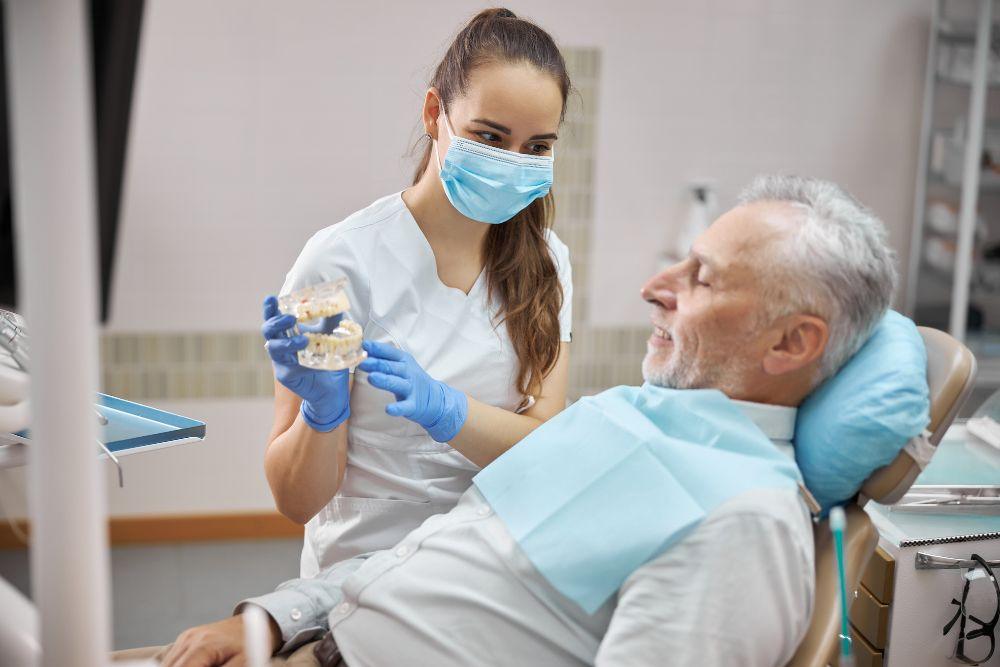
Getting a dental implant isn’t a single-step process, it’s a treatment journey that relies heavily on the body’s natural healing response. At the center of that journey is a biological process called osseointegration, where the titanium implant post gradually fuses with the surrounding jawbone to create a stable foundation for the final restoration.
This fusion is what allows the implant to function similarly to a natural tooth root once healing is complete, providing the strength and stability needed to support a crown, bridge, or denture over the long term.
Unlike many dental procedures where results are immediate, osseointegration unfolds gradually over weeks and months. The exact healing period varies from person to person, influenced by factors such as bone density, overall health, the location of the implant in the mouth, and individual lifestyle habits.
Understanding this process can help set realistic expectations and highlight why patience and proper aftercare are such important parts of successful implant treatment.
At a Glance
- Osseointegration is the biological process where bone fuses directly to a titanium implant, giving it long-term stability.
- Lower jaw implants often integrate somewhat faster (roughly 2–4 months) than upper jaw implants (roughly 3–6 months), though this varies by individual.
- Bone density, overall health, smoking, and oral hygiene during healing can all influence how long osseointegration takes.
- Dentists confirm integration through clinical evaluation and imaging rather than relying on a fixed timeline alone.
- Healing time and long-term implant success are related but not the same thing, ongoing care matters well beyond the initial fusion period.
What Is Osseointegration?
Osseointegration is the biological process through which bone cells grow onto and around the surface of a dental implant, effectively locking it into place. Unlike a natural tooth root, which is held in the jaw by a ligament, an implant relies on this direct bone-to-metal bond for its stability.
This is what allows an implant to function similarly to a natural tooth root once healing is complete. Titanium’s compatibility with bone tissue has been studied extensively over several decades, and osseointegration remains the foundational principle behind modern implant dentistry. Without adequate osseointegration, an implant would not have the strength or stability needed to support a crown, bridge, or denture over the long term.
For patients considering dental implants in Lower Hutt, understanding this biological connection helps highlight why patient health and precise care during the healing period are so essential to achieving long-lasting results.
General Timeframes Commonly Discussed for Osseointegration
While every case is different, osseointegration is often described in general terms across dental literature and patient education resources. These are reference points rather than fixed guarantees, since individual healing varies:
- Lower jaw (mandible) implants are sometimes associated with a somewhat shorter healing window, often discussed in the range of two to four months, due to the density of bone typically found in this area.
- Upper jaw (maxilla) implants may take somewhat longer, sometimes discussed in the range of three to six months, as the bone here tends to be less dense.
- Cases involving bone grafting prior to implant placement often require additional healing time before the implant itself can be placed, which extends the overall timeline.
These ranges are widely referenced as general starting points, but your dentist is best positioned to give you an estimate based on your bone density, overall health, and the specific implant system used.
Why Timelines Vary So Much Between Patients
1. Bone Density and Quality
Denser bone generally provides a more stable environment for osseointegration, while softer or thinner bone may require more time, or additional procedures like bone grafting, before an implant can integrate fully.
2. Location in the Mouth
As noted above, the lower jaw tends to have denser bone than the upper jaw, which is one of the more commonly cited reasons for differing healing timeframes between the two.
3. Overall Health and Medical History
Conditions that affect bone metabolism or healing capacity, such as uncontrolled diabetes or osteoporosis, may influence how long osseointegration takes. Certain medications can also play a role, which is why a full medical history review is typically part of implant treatment planning.
4. Smoking and Tobacco Use
Smoking has been associated with slower healing and a higher likelihood of complications during osseointegration, largely due to its effects on blood flow and tissue repair.
5. Oral Hygiene During Healing
Keeping the surgical site clean and following aftercare instructions closely can support a smoother healing process, while poor oral hygiene may increase the risk of infection or delayed integration.
6. Immediate vs. Delayed Loading Protocols
Some implant approaches involve placing a temporary restoration soon after surgery, while others wait until osseointegration is more advanced before attaching a permanent crown. The approach used can affect how the overall timeline is structured and communicated to patients.
How Dentists Assess Whether Osseointegration Is Complete
Rather than relying on time alone, dental professionals typically use a combination of methods to confirm that an implant has integrated successfully before proceeding with the final restoration:
- Clinical evaluation of the implant’s stability during a follow-up visit
- Radiographic imaging, such as X-rays, to assess bone integration around the implant
- Specialized stability testing devices, which some clinics use to measure resonance frequency as an indicator of integration progress
Because these assessments are individualized, the decision to proceed with a permanent restoration is generally made case by case rather than strictly by calendar date.
If you’re partway through the healing process and have questions about your progress, checking in with a dentist in Lower Hutt can help clarify what stage you’re at and whether your timeline is progressing as expected for your specific case. At Wainui Dental, follow-up appointments during the healing period are generally used to monitor progress and address any concerns before moving forward with the final restoration.

What Happens After Osseointegration Is Confirmed
Once your dental team has confirmed that osseointegration has progressed sufficiently, the process typically moves into its final stages:
Abutment Placement: A small connector piece, called an abutment, is attached to the implant. In some cases, this is placed at the same time as the implant itself, while in others it’s added once integration is further along.
Impressions for the Final Restoration: Your dentist takes impressions or digital scans of the implant site to design a crown, bridge, or denture that fits precisely and matches the surrounding teeth.
Fitting and Adjustment: The final restoration is fitted, checked for bite alignment, and adjusted as needed before being permanently secured.
Ongoing Maintenance: Even after the restoration is complete, dental implants generally benefit from regular checkups and good oral hygiene, similar to natural teeth, to help support their long-term function.
Understanding this sequence can help patients see osseointegration not as the final step, but as a critical foundation that the rest of the treatment builds upon.
The Difference Between Healing Time and Long-Term Success
It’s worth noting that osseointegration timelines and long-term implant success, while related, aren’t exactly the same thing. An implant that integrates within a typical timeframe still requires ongoing care to maintain its stability over the years that follow. Factors like oral hygiene, regular dental visits, and managing habits such as teeth grinding can all play a role in how an implant performs long after the initial healing period has ended.
Frequently Asked Questions
Can osseointegration take longer than expected?
Yes, healing timelines can vary based on individual factors like bone density, overall health, and whether grafting was needed. A longer timeline doesn’t necessarily indicate a problem, but it’s worth discussing with your dentist if you have concerns.
Is it possible for an implant to fail to integrate?
In some cases, an implant may not achieve adequate integration, which can be related to factors like infection, insufficient bone density, or other health considerations. This is one of the reasons follow-up monitoring is an important part of the treatment process.
Do all implant systems follow the same healing timeline?
Not necessarily. Different implant systems, surgical techniques, and loading protocols can be associated with different general timeframes, which is why your dentist’s specific recommendation matters more than a generic online estimate.
Can I speed up the osseointegration process?
While the biological process itself can’t be significantly accelerated, following aftercare guidance closely and avoiding habits like smoking may help support a smoother healing process overall.
Final Thoughts
Osseointegration is a gradual biological process that typically unfolds over a period of months rather than weeks, with timelines that vary based on bone density, implant location, overall health, and individual healing response.
While general reference ranges exist, your dentist’s assessment, based on clinical evaluation and imaging, remains the most reliable way to know when your implant is ready for its final restoration. Wainui Dental can walk you through what to expect at each stage of the process, from initial placement through to final restoration.
Sources:
- National Library of Medicine (PMC) — Osseointegration: an update
https://pmc.ncbi.nlm.nih.gov/articles/PMC3602536/
The core scientific source for the biological process itself — directly supports “What Is Osseointegration?” - Healthify NZ — Gum disease
https://healthify.nz/health-a-z/g/gum-disease
Confirmed relevant — this page explicitly states that smokers and people with diabetes are more likely to develop periodontitis, and that people with diabetes should work to control it to promote good blood vessel health for their gums. This directly backs your article’s “Smoking and Tobacco Use” and “Overall Health and Medical History” sections, where you discuss diabetes and smoking as factors affecting healing. - New Zealand Dental Association — Gum Disease
https://www.nzda.org.nz/public/your-oral-health/gum-disease
Also confirmed relevant — describes how bone and soft tissue loss occurs around teeth affected by disease, reinforcing the article’s broader point about bone health being central to implant stability, and gives you a genuine NZDA-specific citation (rather than just the homepage). - NZDA — Roadmap Towards Better Oral Health, “Issues in Oral Health”
https://roadmap.nzda.org.nz/roadmap-sections/2-issues-in-oral-health

Wainui Dental Clinic has been caring for smiles across the Lower Hutt community with a commitment to quality and personalised treatment. From general dentistry to oral surgery, our dentist in Lower Hutt team uses modern technology to deliver comfortable, patient-centred care. We are passionate about ongoing professional development to ensure every patient receives the best dental experience possible.