
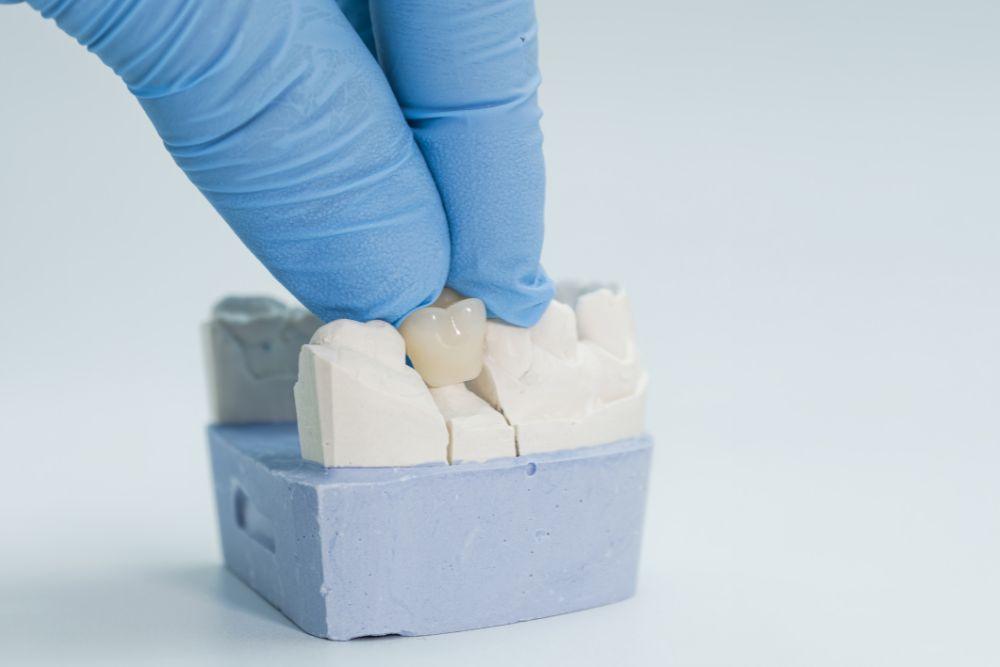
Once a crown is placed and the initial healing period has passed, it can be easy to assume that the treatment is complete and the tooth no longer needs special attention. However, a dental crown does not remove the need for ongoing dental care. The tooth beneath the crown, the gum tissue around it, the crown itself, and the surrounding teeth can still experience changes over time.
Regular dental visits give your dentist an opportunity to assess these areas, check the condition of the restoration, and identify any concerns that may need further attention. Understanding why regular checkups remain important after receiving a crown can help you stay informed about your oral health and recognise changes that are worth discussing with your dental professional.
This guide explains what a dental crown does and does not protect against, why the underlying tooth and surrounding gum tissue still require monitoring, what your dentist may assess during a routine checkup, and which changes you may want to mention between appointments.
A Crown Protects the Tooth, But Doesn’t Make It Immune to Problems
A dental crown covers and reinforces a tooth that’s been damaged, weakened, or treated with a root canal, restoring its shape and function. What it doesn’t do is make that tooth or the structures around it immune to future issues.
The tooth underneath the crown, the gum line at the margin where the crown meets the natural tooth, and the surrounding teeth can all still be affected by decay, gum disease, or other changes over time.
Because a crown sits over the visible portion of the tooth, some problems, like decay forming at the edge of the crown or below the gum line, aren’t always something a patient can see or feel until they’ve progressed further. This is one of the main reasons regular checkups remain important even after a tooth has been restored.
Ongoing care for dental crowns in Lower Hutt typically follows the same general checkup schedule as the rest of your oral health routine, rather than requiring a separate or more frequent visit pattern on its own.
What Can Still Go Wrong With a Crowned Tooth
1. Decay at the Margin
The edge where the crown meets the natural tooth, sometimes called the margin, can be a vulnerable spot for decay to develop, particularly if plaque builds up along that line over time.
2. Gum Recession Around the Crown
Gums can recede gradually for a variety of reasons, and when this happens around a crowned tooth, it can expose the margin or the natural tooth root beneath, sometimes affecting both appearance and sensitivity.
3. Underlying Tooth Structure Issues
If the tooth beneath the crown still has its natural nerve, it remains susceptible to new decay or, in rare cases, further damage that isn’t necessarily related to the crown itself.
4. Wear on the Crown
Over time, crowns can experience wear, particularly for patients who grind their teeth, which may affect how well the crown fits or functions.
5. Issues With Neighbouring Teeth
A crown doesn’t protect adjacent teeth, which remain just as susceptible to decay or gum issues as any other tooth in the mouth.
How Long Do Crowns Typically Last With Regular Care?
While every case is different and no specific timeframe can be guaranteed, the lifespan of a dental crown varies between patients and may depend on factors such as the crown material, oral hygiene, biting forces, and the condition of the underlying tooth.
Consistent checkups and good home care are generally considered part of supporting a crown’s condition over time, though individual results vary based on factors outside of routine care as well, such as grinding habits or overall dental health.
If you’re due for a checkup or have questions about how your crown is holding up, consulting a dentist in Lower Hutt can help assess the current condition of the restoration and the health of the surrounding tooth and gum tissue.

Home Care Habits That Support a Crowned Tooth Between Visits
Checkups are only part of the picture, daily habits at home also play a role in how well a crowned tooth holds up over time.
- Brush along the gum line carefully, where the crown margin sits, to help prevent plaque buildup in this vulnerable area.
- Floss daily, using care around the crown to avoid dislodging it while still cleaning between teeth effectively.
- Avoid chewing on very hard foods or objects, such as ice or hard candy, which can put excess strain on a crown over time.
- Address teeth grinding if it’s a known issue, since a nightguard or other management approach may help protect the crown from excessive wear.
Why Skipping Checkups Can Be Riskier for a Crowned Tooth
For a natural tooth, skipping the occasional checkup might mean a small cavity has more time to develop before it’s caught. For a crowned tooth, the stakes can be somewhat different, since the crown itself can make it harder to notice early changes without professional examination. Decay developing under or around a crown doesn’t always cause immediate discomfort, so it can sometimes progress further before a patient becomes aware anything is wrong.
This isn’t meant to suggest crowned teeth are more fragile than natural teeth, many perform well over long periods with consistent care. It simply means the visual and sensory cues patients might normally rely on can be less reliable once a tooth is covered by a restoration, making professional monitoring a more central part of catching issues early.
Factors That May Influence How Often You Should Be Checked
While a standard checkup interval works well for many patients, certain factors might lead a dentist to recommend more frequent monitoring for someone with one or more crowns:
History of Gum Disease: Patients with a history of periodontal issues may benefit from closer monitoring of the gum tissue around crown margins, since this area can be more susceptible to recession or inflammation.
Multiple Crowns or Extensive Restorative Work: Patients with several crowns, or a mix of crowns and other restorations, may have more surfaces that need periodic evaluation.
Teeth Grinding or Clenching: Because grinding can accelerate wear on a crown, patients with this habit may be monitored more closely to catch wear-related issues before they become more significant.
Difficulty Maintaining Oral Hygiene Around the Crown: Some patients find it more challenging to clean thoroughly around certain crown placements, particularly on back teeth, which may warrant closer attention during checkups.
Your dentist is best positioned to recommend a checkup schedule based on your specific combination of these factors, rather than a generic interval that applies to everyone equally.
The Bigger Picture: Crowns as Part of Ongoing Oral Health
It can help to think of a crown not as a finished, standalone fix, but as one part of a tooth that still belongs to your broader oral health picture. The same daily habits and professional monitoring that support your natural teeth also apply to a tooth that’s been restored. Viewing checkups as an ongoing part of caring for a crowned tooth, rather than a formality that ended once the restoration was placed, can help support its condition for as long as possible.
Frequently Asked Qu estions
Do I need to see my dentist more often if I have a crown?
Not necessarily. Most patients with crowns follow the same general checkup schedule as anyone else, though your dentist may recommend adjustments based on your individual oral health history.
Can a dentist tell if there’s a problem with a crown just by looking?
Many issues can be identified through visual examination, but some problems, particularly decay beneath the crown or at the margin, may only be visible through X-rays, which is one reason periodic imaging remains part of routine care.
What happens if decay develops under a crown?
This depends on the extent of the decay. In some cases, the crown may need to be removed to treat the underlying tooth, while in others, more conservative treatment may be possible. An evaluation is needed to determine the appropriate approach.
Does a crown ever need to be replaced entirely?
Crowns can sometimes need replacement due to wear, damage, or changes in the underlying tooth or gum tissue. Regular checkups help identify when this might be worth discussing with your dentist.
Conclusion
A dental crown restores the function and appearance of a damaged tooth, but it doesn’t remove the need for ongoing dental care.
The tooth beneath the crown, the gum tissue around it, and the surrounding teeth all remain part of your overall oral health and benefit from regular monitoring.
At Wainui Dental, regular dental checkups and good oral hygiene can help your dental professional monitor the condition of the crowned tooth and surrounding tissues.
Sources:
- National Library of Medicine (PMC). (2013). West, N.X., Lussi, A., Seong, J., & Hellwig, E. Dentin hypersensitivity: pain mechanisms and aetiology of exposed cervical dentin. Available at: https://pmc.ncbi.nlm.nih.gov/articles/PMC3585766/
- BMC Oral Health / Springer Nature. (2020). Pathogenesis, diagnosis and management of dentin hypersensitivity: an evidence-based overview for dental practitioners. Available at: https://link.springer.com/article/10.1186/s12903-020-01199-z
- Dentalcare.com (Procter & Gamble Professional / continuing education). (n.d.). Dentinal Hypersensitivity: A Review — Theories. Available at: https://www.dentalcare.com/en-us/ce-courses/ce200/theories
- Journal of Contemporary Dental Practice. (2005). Walters, P.A. Dentinal Hypersensitivity: A Review. Available at: https://thejcdp.com/doi/JCDP/pdf/10.5005/jcdp-6-2-107

Wainui Dental Clinic has been caring for smiles across the Lower Hutt community with a commitment to quality and personalised treatment. From general dentistry to oral surgery, our dentist in Lower Hutt team uses modern technology to deliver comfortable, patient-centred care. We are passionate about ongoing professional development to ensure every patient receives the best dental experience possible.